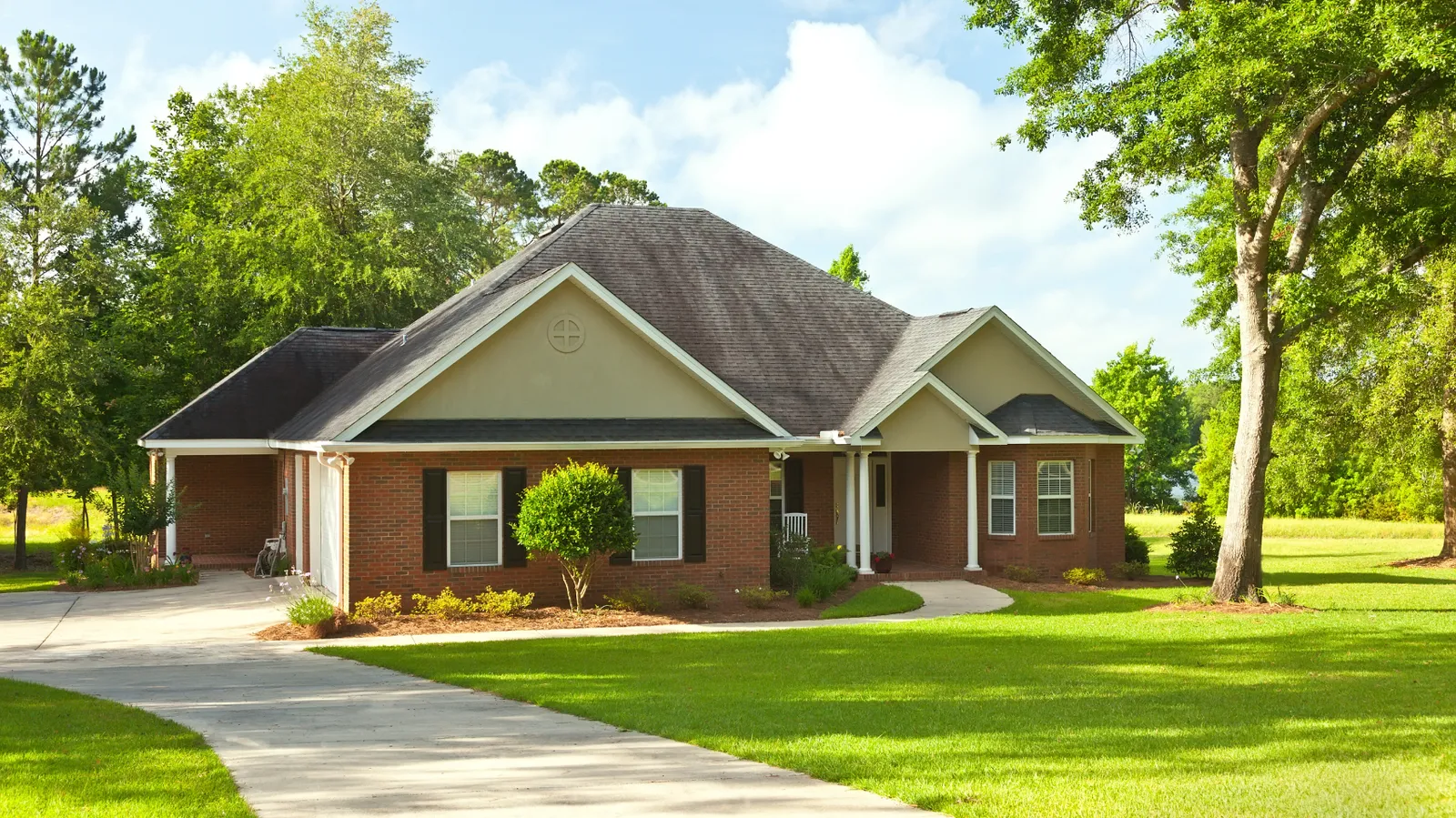
Hail Damage Roof Repair in Muskogee, OK
Hail damage roof repair in Muskogee, OK is measured slope by slope, because stones don't fall evenly across a house.
Hail crossed your street and the roof still looks fine. Ask for a look; our roofers count every slope.
Hail damage roof repair in Muskogee, OK
A hail inspection is a counting job, and it works the soft parts of the roof before it looks at the shingles.
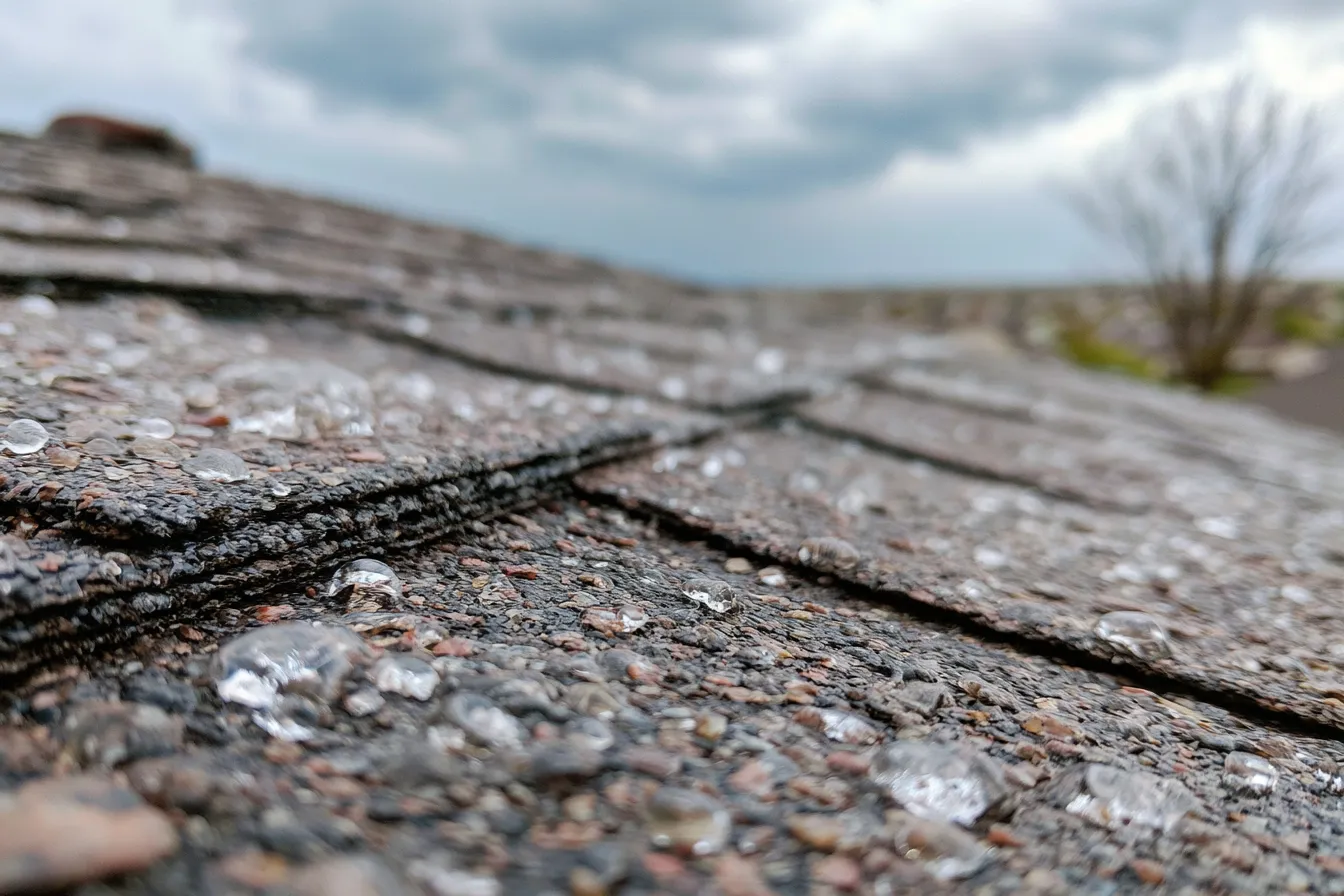
The county file logs an inch of hail at Muskogee on April 4, 2025. A stone that size bruises an asphalt mat without breaking the surface, which is why a roof can take a serious hit and look untouched from the driveway the same afternoon.
Leave that bruise undocumented and it doesn't stay still. The mat keeps shedding granules through the next two summers, the bare asphalt bakes, and by the time the damage is obvious from the ground the storm that caused it's too far back for any carrier to accept as the date of loss.
Soft metal read first
A roofer starts on the gutters, vents, caps and any metal that dents, because those record stone size honestly. They're the fastest way to know whether a roof was hit hard enough to bother going further.
Every slope counted separately
Each face of the roof gets its own count of impacts within a measured square. Adjusters work the same way, so a count taken any other way won't line up with theirs.
Mat exposure checked
Where granules have been knocked away, a roofer looks for the black asphalt underneath and presses for the soft give of a bruise. That give is the difference between cosmetic marking and a shortened roof life.
Granule loss measured at the ground
The gutters and the splash blocks hold what the roof has already lost. A heavy band of grit after one storm means the covering shed coating instead of simply aging.
Dated photographs of each face
Wide and close images per slope, with the date attached to the file. Photographs taken after any repair are worth very little to a carrier.
The roofer's own terms in writing
Any work that follows carries its own workmanship term, in the name of the roofer who does it. The material warranty is a separate document and comes from whoever made the shingle.
Soft metal tells before shingles do
Six things worth walking around to look at after a storm. Every one of them is on the ground or visible from it.
Gutters and downspouts
Dents along the top edge of a gutter record the stone size as reliably as anything on the roof. Aluminum's soft enough to mark at the same impact that bruises a shingle mat.
Vents, caps and turbines
The thin metal on a roof vent dimples early and stays dimpled. A vent full of small craters means the slope around it took the same fall.
Flashing at the walls
Bent or pocked flashing points at a slope that caught the storm side-on. Water finds those seams long before it finds a shingle field.
The deck seen from the attic
Daylight or fresh damp on the sheathing after a hailstorm means something opened up. It shows from inside the attic before it shows anywhere else.
Grit in the splash blocks
The granules washed off during the storm settle where the downspouts empty. A fresh band of them is the roof telling you what it lost.
The paperwork you already hold
Your declarations page states whether the policy pays replacement cost or actual cash value, and that decides what a claim's worth before anyone climbs anything. Read it while the storm date's still recent.
Each slope counted on its own
A roofer works the roof face by face, and an adjuster will do the same. The counting itself is the slow part of the visit, and it's the part worth not rushing.
A roofer works the soft metal first
Gutters, vents and caps come first, from the ground where possible. If the soft metal is untouched, the conversation is usually much shorter.
A roofer marks a test square per face
A measured square on each slope, with impacts counted inside it. That's the number a carrier recognizes, and every face of the roof gets its own.
A roofer photographs what the count found
Each face is photographed wide and close, dated as it goes. The record belongs to you whether a claim follows or not.
A roofer tells you either way
The count sometimes comes back too light to be worth a claim, and that answer gets said plainly. A roofer who only ever finds damage is telling you something.
Your deductible against the roof price
The re-cover totals above work off 24 squares of finished roof, the planning size the regional table carries for this math. Nobody's measured your roof yet, so treat them as a bracket while you look up your deductible.
Whether a hail claim is worth opening turns on two numbers: your own deductible, which sits on your policy's declarations page, and what re-covering the roof would run. For the second one, regional planning ranges for northeastern Oklahoma put the impact-rated grade at $11,040 to $17,040 and architectural shingle at $8,880 to $14,880, figured on 24 squares at $460 to $710 and $370 to $620 a square installed.
$460 to $710 per square · Those totals rest on a 24-square planning size and nobody's counted your squares yet, so the bracket moves once somebody does. No deductible figure appears here, because yours is the only one that decides anything, and it's on your own policy. When a documented count comes in well under the deductible, the advice worth taking is to keep the photographs and leave the claim alone.
Regional planning ranges for northeastern Oklahoma. Your deductible decides as much as these do.

Hail questions from Muskogee County
The ones that come up in the week after a storm. Short answers, with the storm pages carrying the rest.
Get Muskogee hail damage read
Name the storm date and a local roofer counts each slope against it, then writes out what the count found. If it comes back too light to claim, that's what the paperwork will say. Ask the roofer to stop at any point and it stops there.