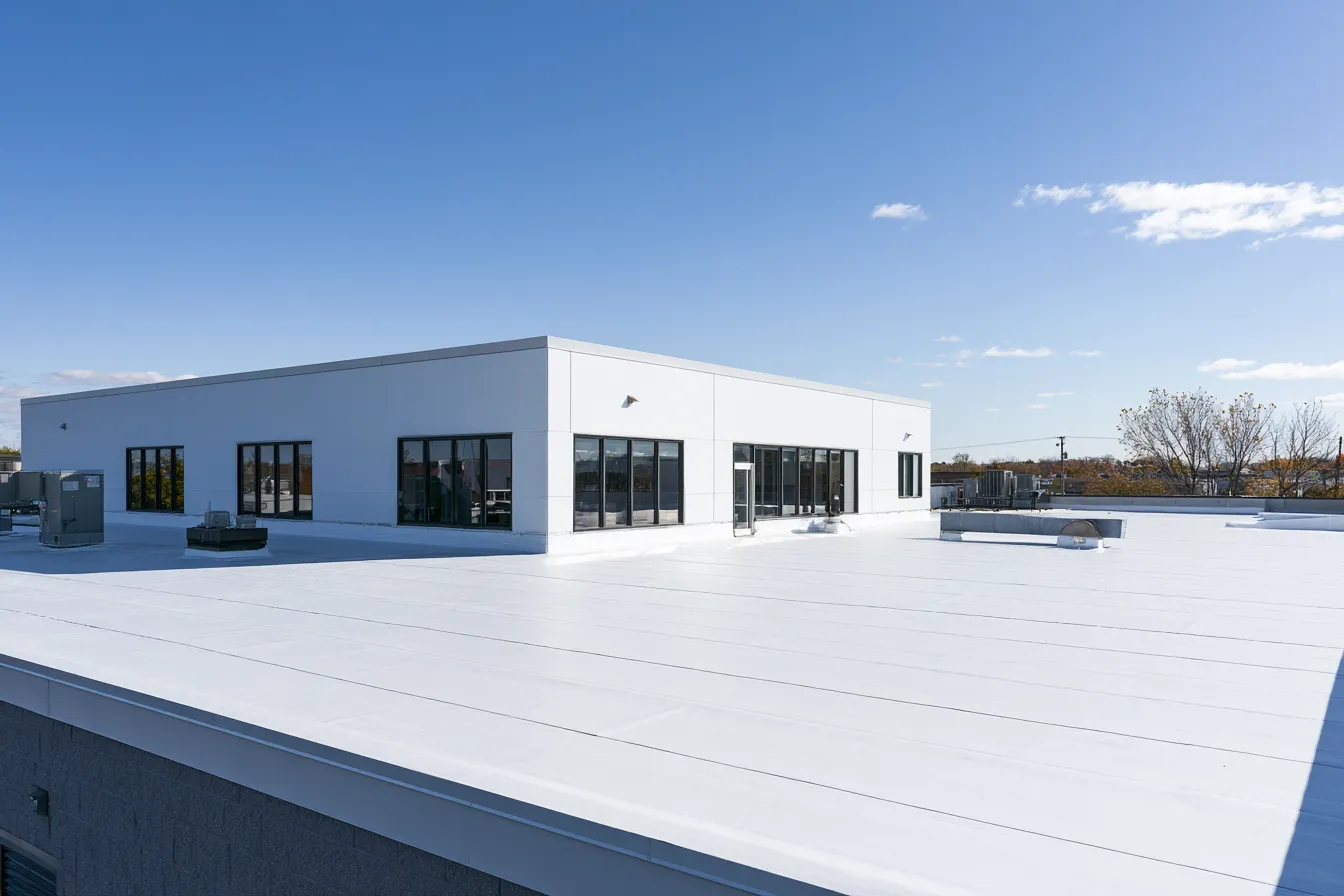
Commercial Roofing in Muskogee, OK
Commercial roofing in Muskogee, OK turns on one early decision: whether the existing system can be built over or has to come off.
Two commercial roofs the same age can need completely different work. What is under the membrane is what decides.
Commercial roofing in Muskogee, OK
A low-slope roof fails differently from a pitched one, and rarely before the tenants below notice.
Downtown Muskogee's commercial core dates to the railroad years before statehood, and much of the city's business property has sat under flat and low-slope roofs ever since. Water doesn't run off those roofs; it's directed off them, and everything else follows from that.
The drains show the whole problem in miniature. A blocked or undersized drain turns rainfall into standing water, standing water finds the seams, and a seam that's been wet two seasons is no longer a seam. Most membrane failures start at a detail small enough to clear by hand.
What the commercial scope has to name
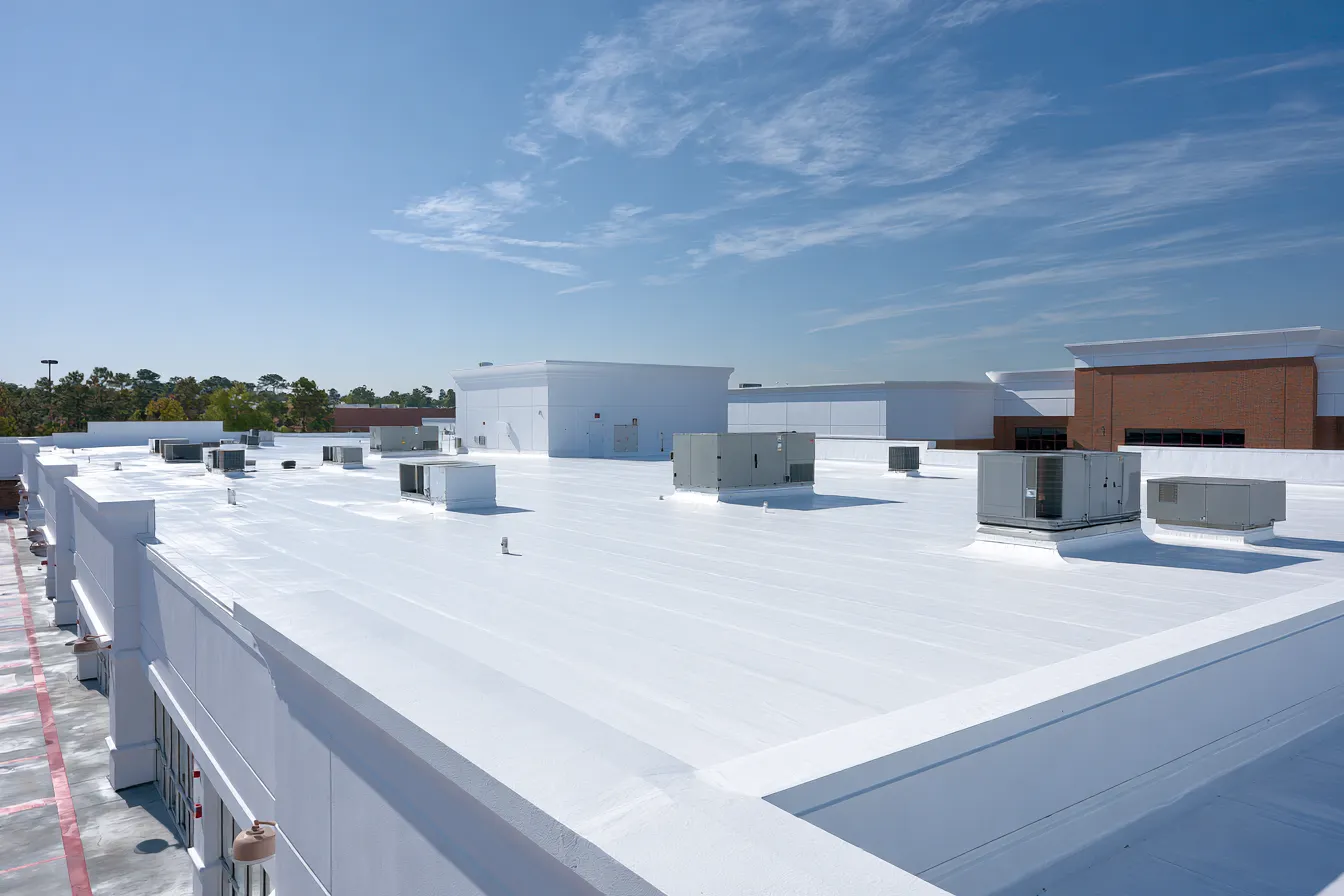
A commercial estimate is only as good as what it commits to on paper. These six are where a vague one hides its surprises.
None of it is exotic. It's the list a property owner can hold an estimate against, and one that leaves something off should account for it.
Deck condition, stated
What the structural deck is made of and what shape it is in once the covering comes off, whether that is steel, concrete or timber. An estimate that assumes a sound deck without saying so is where change orders come from.
Tear-off or recover, decided
Tear-off strips the existing system back to the deck; a recover lays a new membrane over what is already there. The document should name which one, and the condition that would change the answer once the roof is opened.
Drainage, mapped
Every drain, scupper and internal leader located, with any place water sits after a storm marked. Ponding is the single most reliable predictor of where the next failure starts.
Insulation and R-value
R-value is the measure of how well the insulation layer resists heat flow, and on a commercial roof it is a line item with a real cost attached. The document should say what is going back on and to what value, because this is a quiet place for a specification to slip.
Penetrations, counted
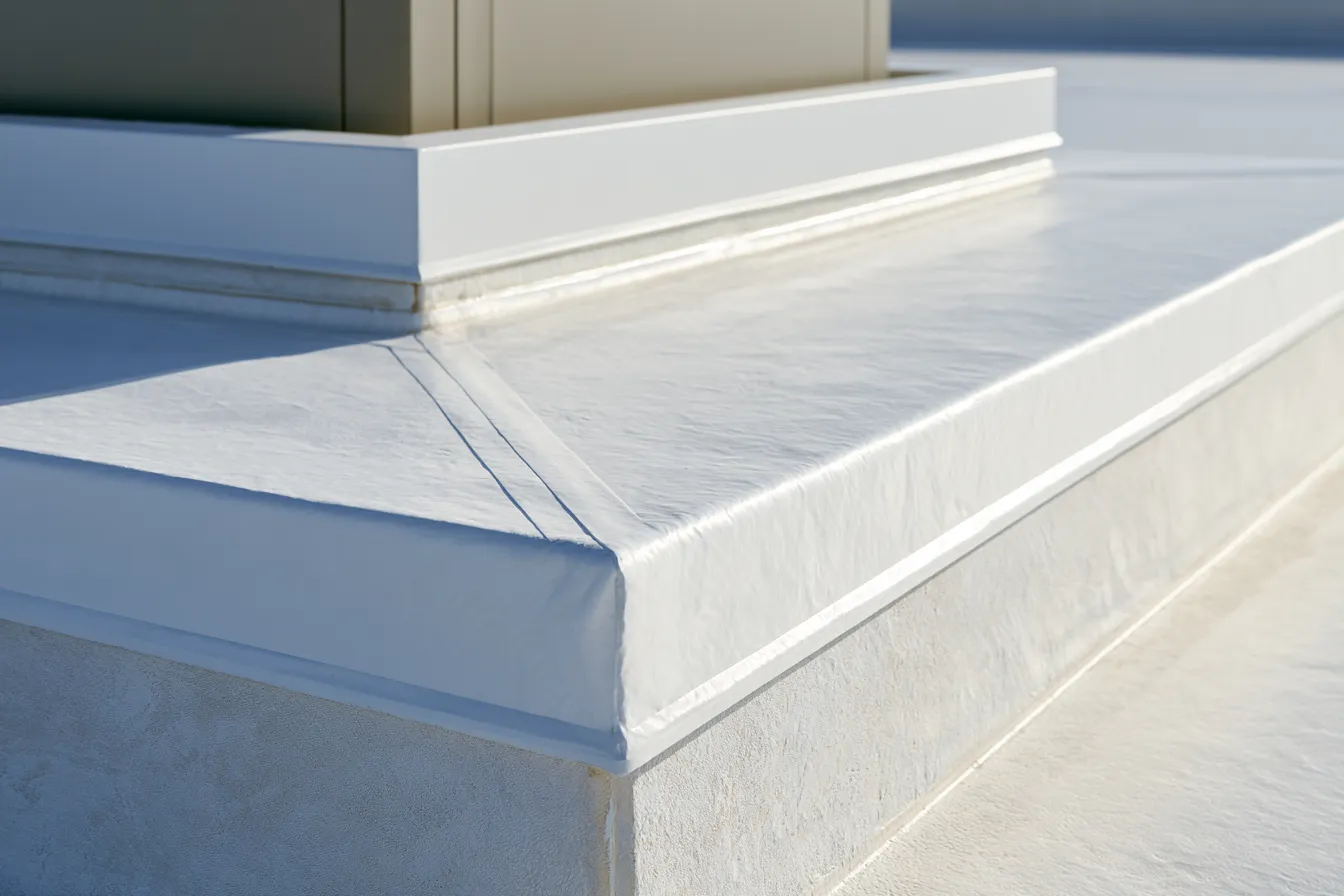
Curbs, vents, pipes, hatches and every unit sitting on the roof each need their own flashing detail. Each one gets counted, since the count drives both the labor and most of the future leak risk.
Code compliance and the warranty terms
What the current code requires for this building at this level of work, and what our roofer will put a name to. The workmanship term comes from our roofer, so it belongs on the estimate before the work starts.
The membrane systems side by side
Four system types cover nearly every low-slope roof in this city. The table sets out what each one is and where it makes sense, by system type throughout, because the installation matters more than the label.
| System type | What it is | Where it suits |
|---|---|---|
| TPO single-ply | A single layer of thermoplastic sheet, heat-welded at the seams, usually light in color | Widely specified on newer commercial buildings; the reflective surface is an argument in Oklahoma summers |
| EPDM single-ply | A synthetic rubber sheet, typically dark, seamed with adhesive or tape | A long-serving system that handles temperature swing well; the dark surface takes on more heat than a reflective one |
| Modified bitumen | Asphalt sheet reinforced and applied in layers, torched, cold-applied or self-adhered | Useful on roofs with heavy foot traffic or awkward detailing, where a tougher surface is worth the extra weight |
| Built-up roofing | The traditional layered system, alternating bitumen and reinforcing plies under a surfacing | Still found across older downtown buildings and still repairable; the heaviest of the four, so the deck has to carry it |
System types only, deliberately: no manufacturer is named here. Which one suits a building depends on the deck, the drainage, the traffic it takes and what is already up there, so the choice is settled on the roof itself.
Phasing around tenants and trading hours
A working building sets the sequence. No section is opened wider than can be made watertight before the crew leaves it.
Open the roof before pricing it
Cores are cut and the layers underneath are examined, so the tear-off or recover decision rests on what is really in the assembly. Pricing a commercial roof from the surface alone is guesswork with a number attached.
Divide the roof into sections
The work is broken into areas that can each be opened and closed inside a single dry stretch. That is what keeps a partly-stripped roof from meeting an Oklahoma storm overnight.
Work to the building's hours
Deliveries, cranes and the noisiest stages are set against trading hours and tenant access first, ahead of the crew's convenience. Agree that schedule in writing before the crew mobilizes.
Detail, test and hand over the paperwork
Flashings, terminations and drains are finished and checked, then the warranty documents and the as-built details go to the owner. A roof handed over without its paperwork is unfinished.
What Muskogee property owners ask
The questions that come up before a commercial roof gets committed to a budget. Answered briefly here, in full on the pages each one names.
Have the Muskogee roof deck assessed
You get the assembly opened and read, the drainage mapped, and an estimate that names the deck and the system instead of describing a typical roof. Whether any of it turns into work this budget year is yours to decide.