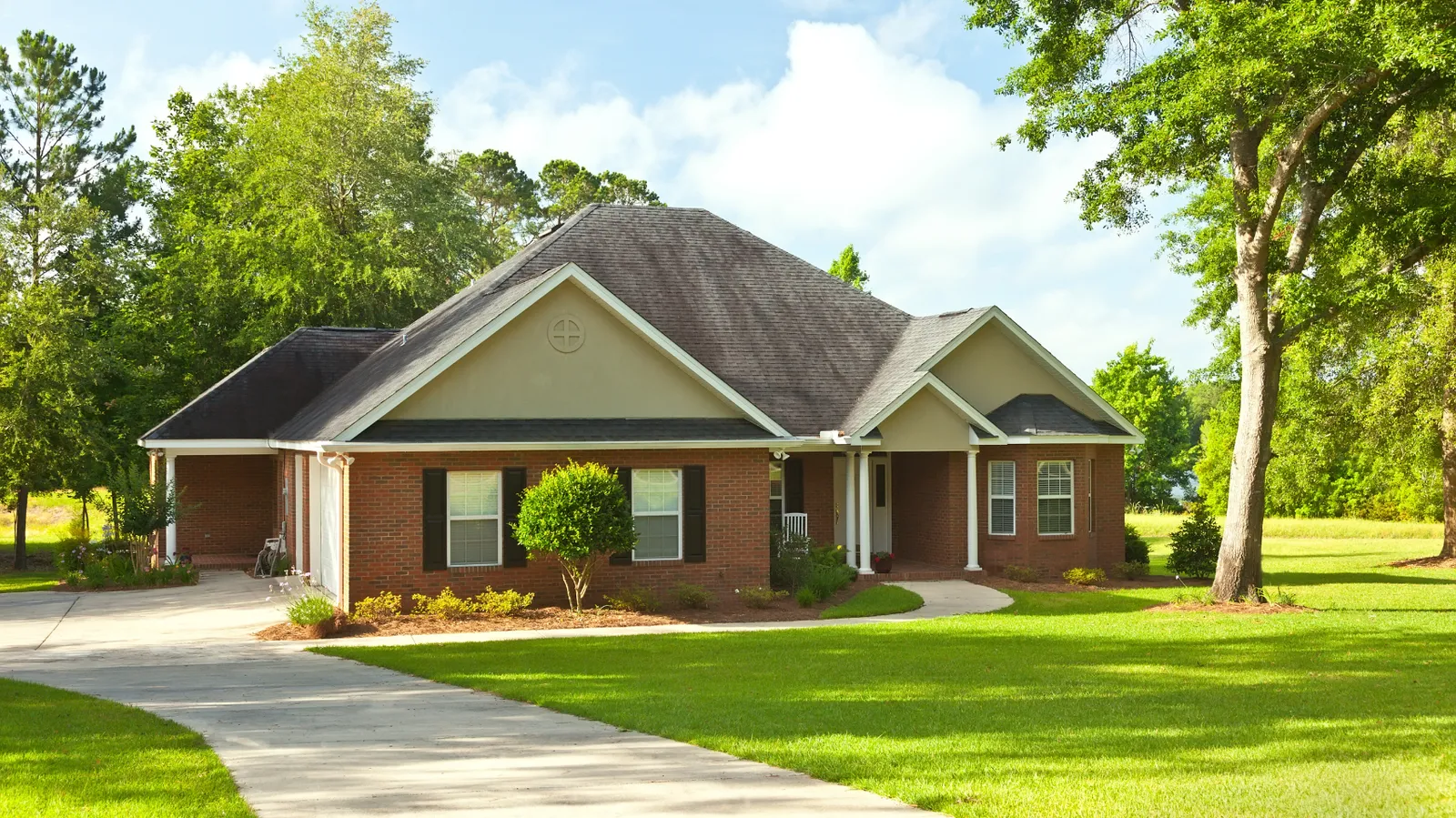
Roof Repair in Muskogee, OK
Roof repair in Muskogee, OK starts with finding where the water gets in, which is rarely where the stain shows.
The stain on the ceiling appeared overnight and hasn't spread since.
Roof repair in Muskogee, OK
A repair is worth doing when the covering around it still has years left, and worth questioning when it doesn't.
Repair or replace is a money question first: patching a covering already near the end of its life buys a season, not a decade.
That question comes up a lot here. Whole streets went up in the same stretch of years, so a leak on one house is usually a leak the neighbors are two winters away from. The county storm record explains the timing more often than the roof does.
A repair prices off how much of the roof it touches, so a pipe boot and a rebuilt valley are separate jobs with one name between them. It's worth measuring against what re-covering the slope would run: once a patch approaches a sizable fraction of that, the math has stopped favoring the patch. Your own figure comes off a measurement, and the written estimate holds long enough to compare.
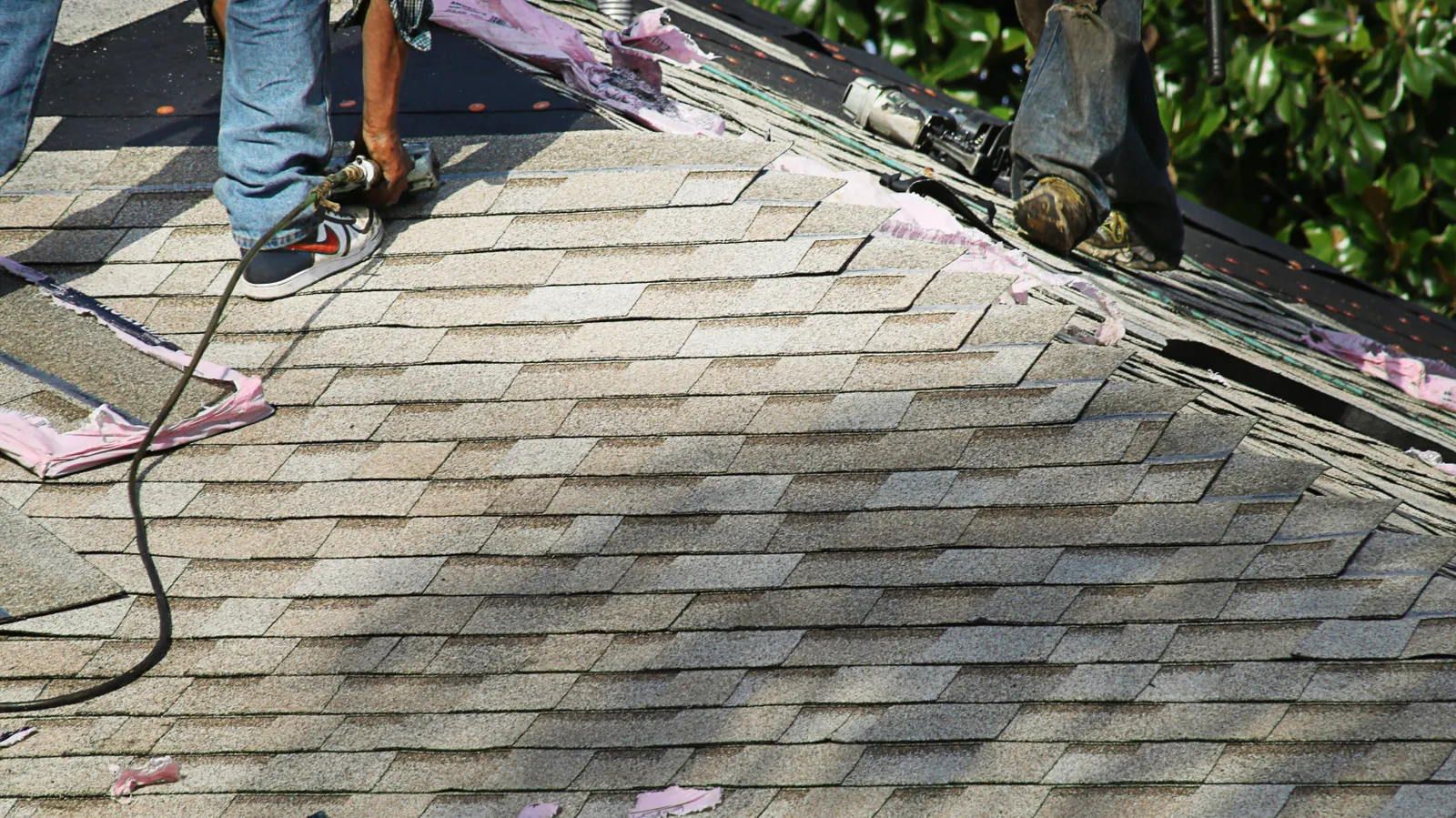
Flashing at every junction
A roofer pulls the metal where the roof meets a wall, a chimney or a dormer, checks it, and re-sets or replaces it. Most leaks people call shingle problems turn out to be a flashing detail that opened up.
Valleys cleared and rebuilt
Where two slopes meet, the water volume is highest and the wear is fastest. A valley that has lost its granules or its metal comes apart and goes back properly.
Penetrations resealed
Pipe boots, vents and anything else coming through the deck each get their own detail. A cracked rubber boot is one of the cheapest failures to fix and one of the most common to find.
Decking spot-repair
A roofer cuts out any sheathing that's soft underfoot and replaces it before new covering goes over. Laying shingles across a wet sheet buries the problem where nobody will see it until the ceiling does.
Shingle replacement in kind
Missing, lifted or cracked shingles get matched as closely as the existing covering allows, and an older roof will rarely match perfectly. A roofer should say so out loud before the work starts.
What the roofer stands behind
Whoever does the repair sets its workmanship term and states it in their own name; the length and the wording are theirs, not this brand's. Ask what it is before you sign.
The details that fail on older roofs
Six places a roof of this age gives way first. Any one of them is worth a look from above before it becomes the ceiling's problem.
A stain that stops spreading
Water found a way in once and hasn't since, which usually means a detail that only leaks in certain wind. It's the easiest to ignore and the easiest to fix early.
Granules banking up at the downspout
The coating protecting the mat is washing off somewhere above. A steady accumulation says the covering is wearing out broadly, which changes a repair question into a replacement question.
A pipe boot split around the collar
The rubber hardens and cracks years before the shingles around it give up. It's a small part in a place that leaks straight into the house.
Nail heads showing through
Fasteners backing out lift the shingle above them and break the seal. Left alone they let the next wind get underneath the course.
Daylight in the attic
Any light through the deck is a hole, and a hole that size has been letting water in longer than it's been letting light through.
A previous patch that does not match
Someone has been up here before, which tells you where the roof has already failed once. A repair that was never written down is a repair nobody can stand behind now.
Tracing water back to its way in
Water travels along the deck before it drops, so the stain is evidence rather than an address. Finding the entry takes a walk of the whole slope, and it's the part worth being patient about.
Start inside, under the stain
The attic side shows the run: a wet rafter, a dark line along the sheathing, the direction the water travels. That line points uphill toward where it started.
Then the slope above it
A roofer works the area above the stain and outward from it, checking flashing, valleys and penetrations in turn. Photographs are taken as it goes, whether or not any of it turns into work.
Put the fix on paper
The repair gets itemized with what it covers and what it leaves alone, plus the workmanship term the roofer stands behind. Nothing is agreed on the roof.
Do the work in one visit where it fits
Most single-detail repairs are the work of a morning, and a repair spanning several slopes runs longer and waits on the weather. Either way the sheet you agreed is the sheet that gets worked to.
What separates two Muskogee repairs
A repair is priced by how much of the roof it touches, so a single pipe boot and a rebuilt valley across two slopes are different jobs wearing the same word. The useful comparison is against what a new covering runs.
The regional planning ranges for a full covering sit on the cost page; they're per-square planning figures for a whole covering. Your own repair figure comes off a measurement, and it holds long enough for you to compare it with somebody else's.

Repair questions on aging houses
The ones that come up while the bucket is still under it. Fast answers first; the depth is a click away.
Get a Muskogee leak seen to
Say where the water is showing and a local roofer traces it back to the way in, then puts the repair on an itemized sheet you keep. Nothing gets signed while somebody is standing on your roof.