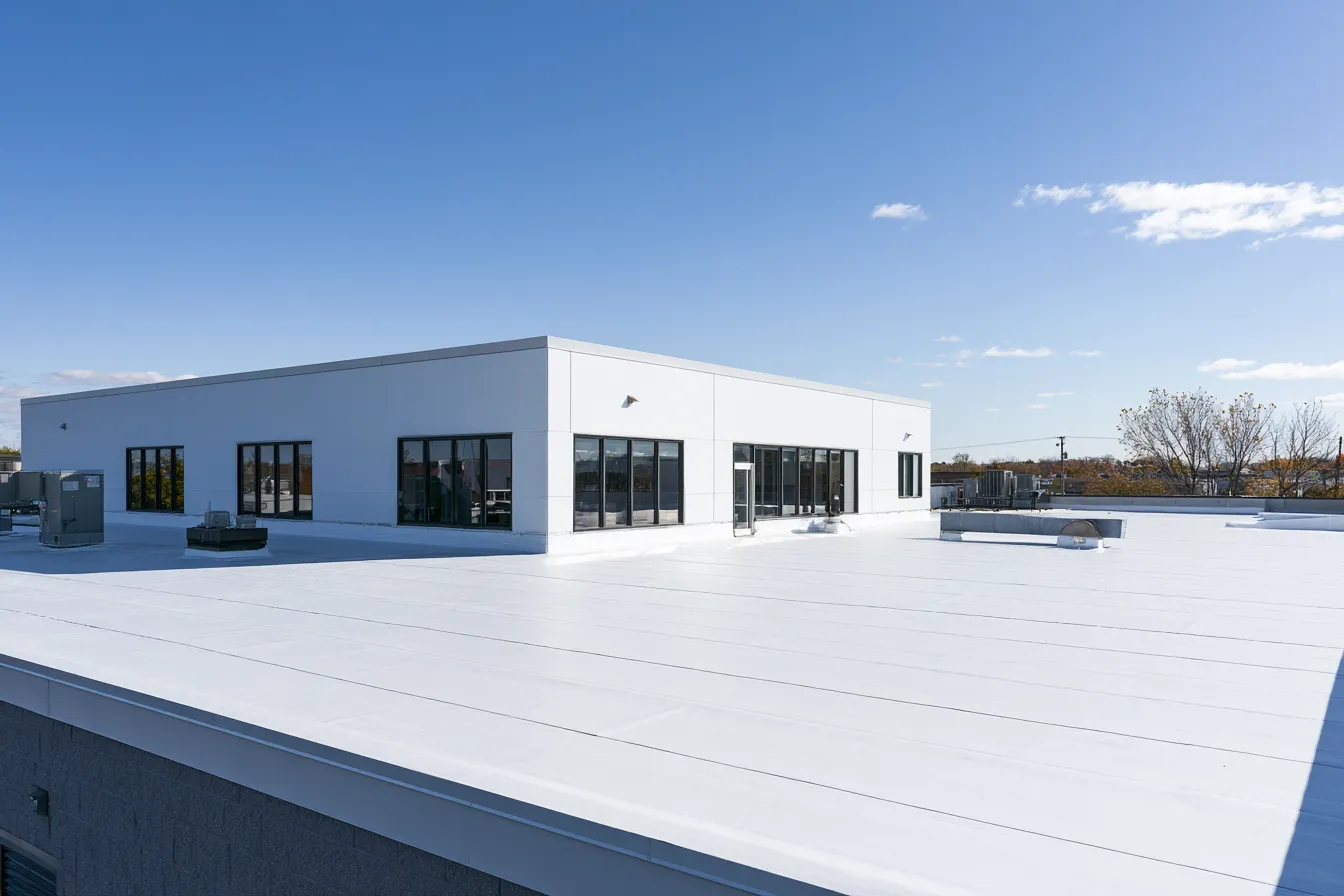
Flat Roof Repair in Muskogee, OK
Flat roof repair in Muskogee, OK starts by naming the system up there, because the same fault is fixed differently on each one.
There's a patch of standing water on the porch roof three days after the rain stopped.
Flat roof repair in Muskogee, OK
A low-slope roof isn't a flat one; it's built to move water slowly, and repair begins with finding out why it stopped moving.
On an older house the porch and patio sections are the parts nobody's looked at in decades: invisible from the ground until the ceiling below them stains.
Those sections are rarely the original system. A back porch built flat in 1955 has usually been patched, coated or re-covered by two or three hands since, and what's up there now is whatever the last of them chose.
We have no coating or membrane figure we could stand behind, so none is printed. The three options separate by scope: clearing an outlet, patching a located fault, or re-covering a section whose fall or insulation has gone. A coating is no repair for a membrane that's already failed.
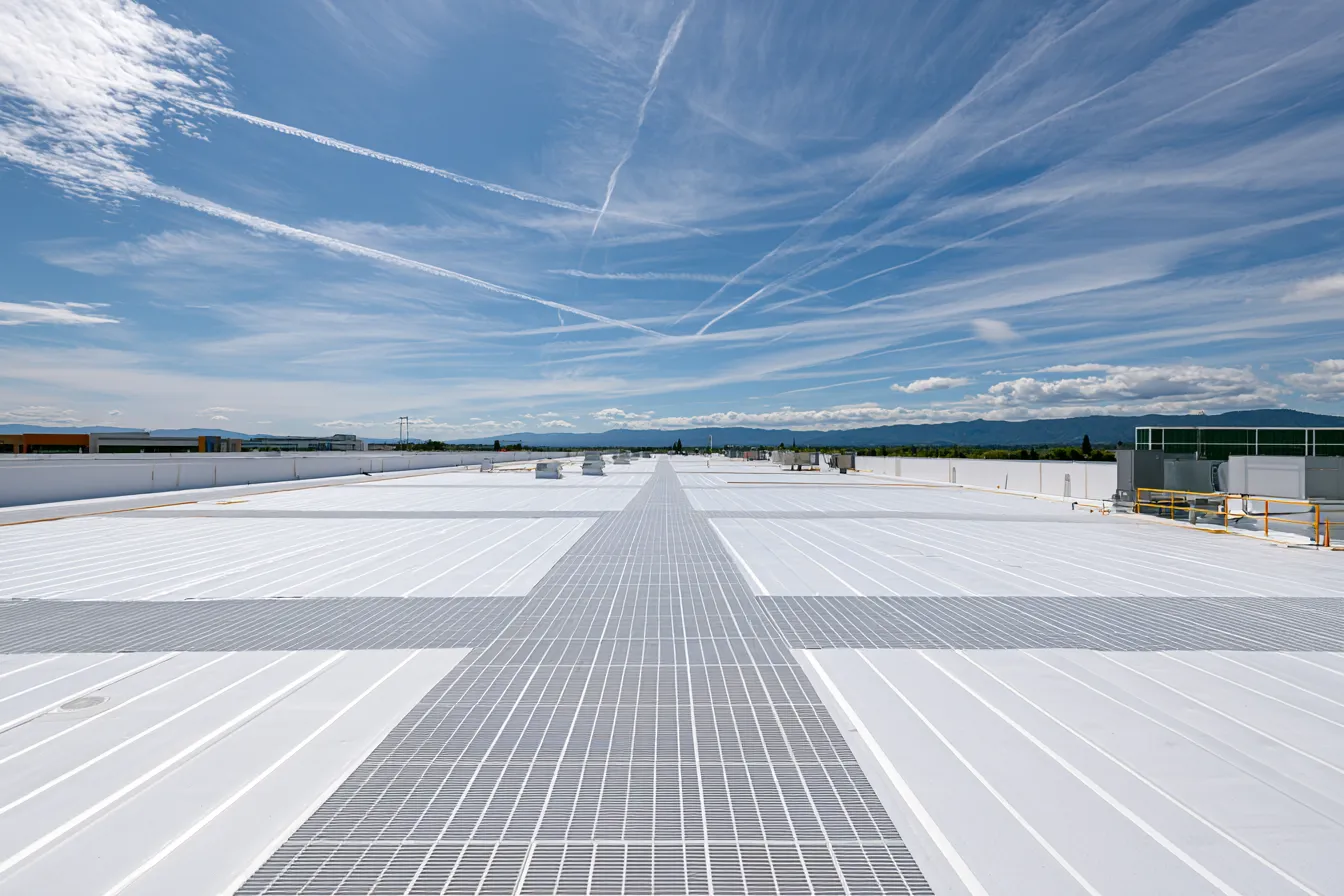
Name the system first
Built-up, modified bitumen and single-ply membrane look similar from a ladder and repair completely differently. A roofer identifies which one is up there before touching it, because the wrong patch material simply won't bond.
Find the low spots
Standing water is mapped where it actually sits, ideally within a couple of days of rain. Ponding marks the failure point before the failure happens.
Check every outlet
Drains, scuppers and internal leaders are cleared and tested. A blocked outlet turns a sound roof into a pond, and it's the cheapest fault on this list to fix.
Read the seams and terminations
Seams, flashings and the point where the low slope meets a wall take the most movement. That junction is where most porch-roof leaks start.
Probe the insulation underneath
Where a membrane has been open, the layer beneath is checked for saturation. Wet insulation left in place under new material is money spent sealing in the problem.
Written findings and the term
Photographs, the system named and the fault located, all of it written down. The workmanship term on any repair is the installing roofer's to set and to honor.
Why water is sitting up there
Six reasons a low-slope section holds water. They're listed in the order they're usually found.
A blocked outlet
Leaves and grit have closed the drain or the scupper. Clear it and the pond often disappears entirely.
The fall was never right
Some porch roofs were built with too little slope to begin with. Water sits because it was always going to, and no patch changes that.
A dip that grew
Decking sags between joists and the low point deepens each season. Water finds it, weight holds it there, and the dip gets worse.
Seam failure
Two sheets have separated along their join. Look for a dark line where the water tracks along the seam.
Failed flashing at the wall
Where the low slope meets the house, the upstand has pulled or cracked. This is the leak that stains an interior wall rather than a ceiling.
Coating over a live problem
Somebody rolled a coating across a wet or moving membrane. The coating hides the fault for a season and the fault continues underneath it.
Name the system, then find the fault
A roofer identifies the material before diagnosing anything, because the same symptom means different things on each system. The steps below follow that order.
A roofer names the material
Built-up, modified bitumen or single-ply, established from the surface, the seams and the edge detail. Everything after this depends on getting it right.
A roofer maps the water
Ponding, outlets and the direction of fall are recorded across the whole section. The map shows whether the problem is one spot or the entire slope.
A roofer checks what is underneath
The layers below are tested where the membrane has been open. Saturated insulation changes the repair from a patch to a section replacement.
A roofer writes it up
The system, the fault, the photographs and the options, with prices against each. You choose from that sheet in your own time.
Why two Muskogee flat-roof repairs price nothing alike
A cleared drain and a re-laid section are different jobs wearing the same word, which is why no figure means anything before the system is named. The pitched roof above it's the nearest published comparison.
The number here depends on how much of the section is affected, whether the insulation underneath is wet, and whether the fall can be corrected without re-covering, so it comes off the survey.
Questions about patio and porch roofs
The ones that come up about the section of roof nobody thinks about. Short answers, and the low-slope detail lives on this page.
Get the Muskogee low slope read
Say where the water sits and a local roofer identifies the system, traces the ponding to its cause, and photographs what is up there. The photographs come to you whatever you decide to do next.