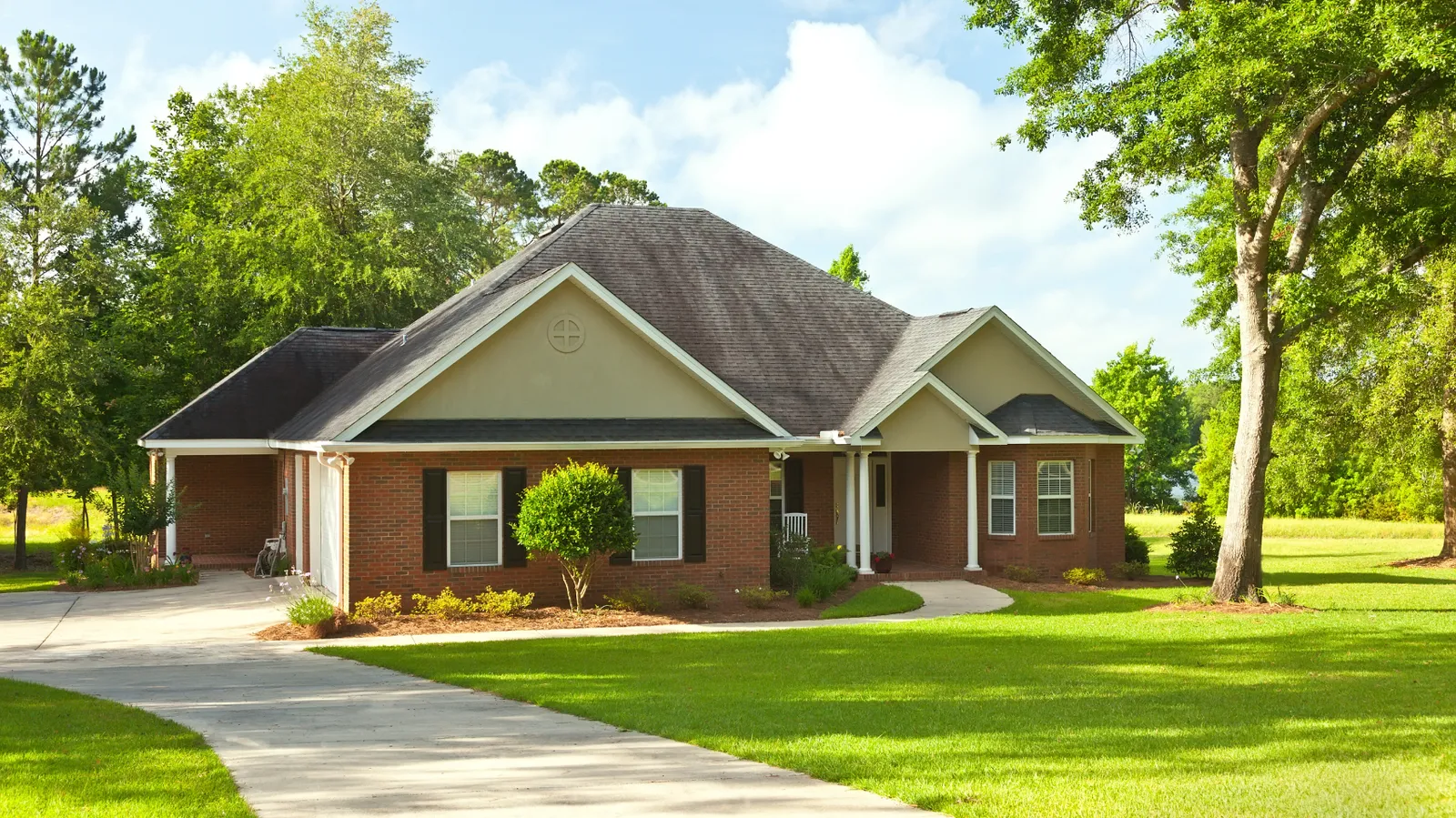
Asphalt Shingle Roofing in Muskogee, OK
Asphalt shingle roofing in Muskogee, OK covers most houses in town, and the grade underneath it's where the real choice sits.
You're looking at a covering that has done its years and a board with two grades. The difference isn't the color.
Asphalt shingle roofing in Muskogee, OK
Asphalt is the default covering here, and being the default is a reason to install it carefully instead of casually.
Asphalt is what sits on most of the roofs around here.
Take one street of 1970s houses that all went up inside two years. Their roofs come due inside the same short window, the same crews work the block, and the difference between the houses ten years from now is almost never the color on the sample board. It's whether the deck was checked and whether the flashing was replaced or reused.
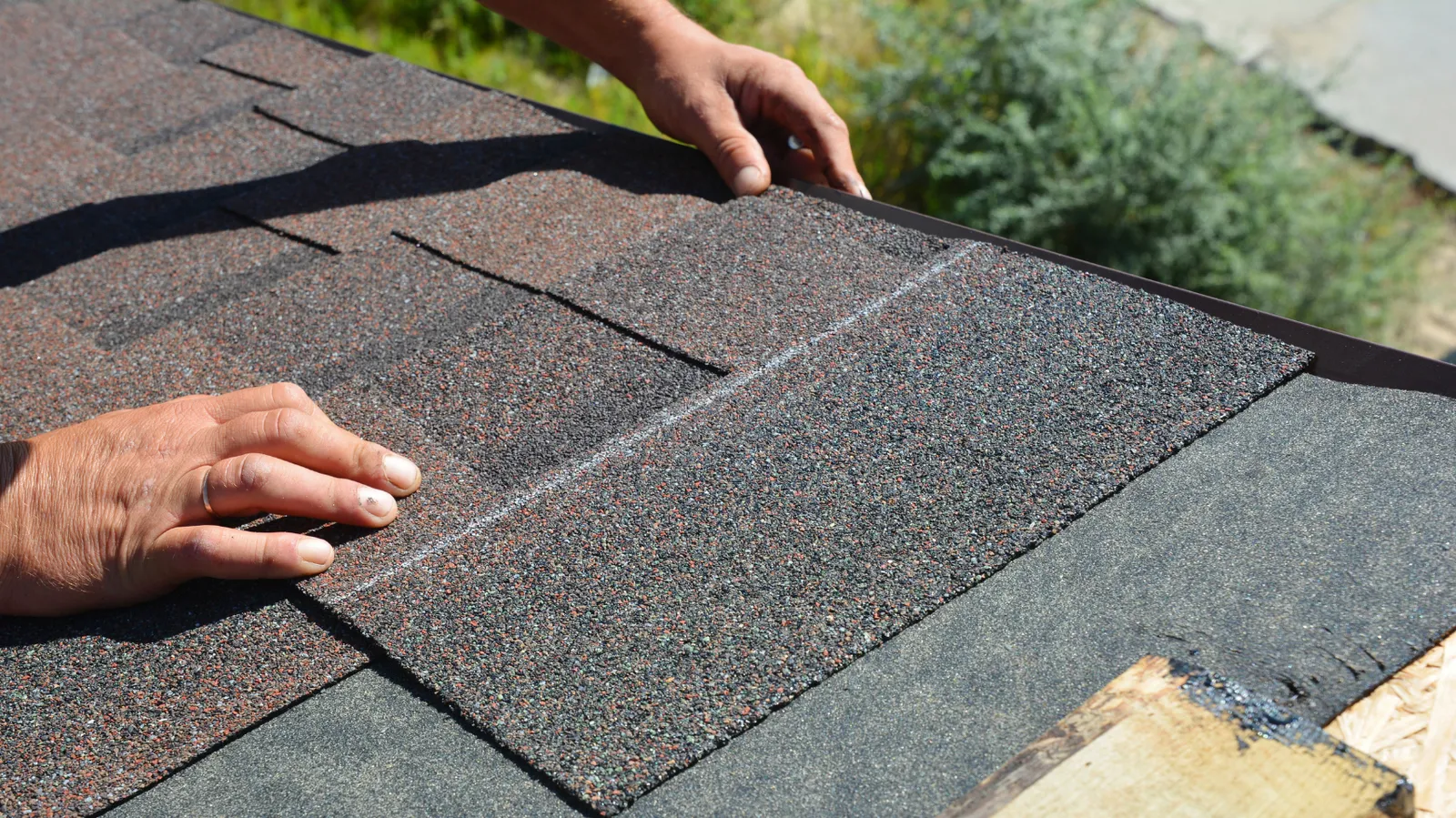
Tear-off to the deck
The old covering comes off completely so the sheathing can be seen. Laying new shingles over old hides the one thing worth looking at.
Deck inspection and repair
Every sheet is checked underfoot and anything soft is cut out and replaced. It's the line item most likely to move on an older house, which is why it belongs on the estimate before the work starts.
Underlayment and ice-and-water
A full underlayment layer goes down, with self-adhering membrane in the valleys and around penetrations. This is the roof's second line, and it's invisible the moment the shingles land.
New flashing throughout
Valleys, walls, chimneys and pipe boots get new metal and new boots. Reusing tired flashing under a new roof is the commonest way a new roof leaks in its first year.
Shingle grade as specified
Architectural or impact-rated, laid to the manufacturer's nailing pattern and exposure. The nailing pattern is what the wind rating depends on, and it isn't visible once the course above goes down.
Ridge, vents and cleanup
Ridge cap, ventilation and a magnet sweep of the grounds finish the job. The roofer who installed it stands behind the workmanship under their own name.
How asphalt wears on Muskogee houses
Six things a roofer looks for on a covering that has been up a while. None needs a ladder.
Check the downspout splash
Look for granules banking up where the water lands. A steady accumulation means the mat above is going bare.
Look along the courses
Watch for tabs curling or cupping at their corners. Curling means the shingle has dried out and lost its flexibility.
Find the nail pops
Spot any small raised bumps in an otherwise flat course. A backed-out nail lifts the shingle above it and breaks the seal.
Read the bare patches
Note anywhere the surface has gone dark and smooth. Exposed asphalt bakes far faster than coated shingle does.
Watch the valleys
Look at where two slopes meet and the water runs hardest. Valleys wear out first on almost every roof of this age.
Count the layers
Check at a rake edge for how many coverings are already up there. Two layers changes the tear-off, the price and sometimes the warranty.
Deck check, underlayment, shingle, ridge
The order is the same on every asphalt roof, and the second step is the one that decides the price. Each stage is set out below.
Everything comes off
The old covering is removed to the bare deck and the grounds are protected while it happens. Nothing about the roof underneath is known until this point.
The deck is inspected
Sheathing is sounded and any soft or delaminated sections are replaced. This is why an agreed per-sheet rate belongs on the estimate.
Underlayment and flashing
Underlayment covers the deck, membrane goes into the valleys, and new metal is set at every junction. The roof's watertight at this stage, before a single shingle shows.
Shingles, ridge and sweep
Courses go on to the specified nailing pattern, then ridge cap and ventilation. A magnet sweep of the grounds closes the job.
What the grade step actually adds
Both grades are figured on 24 squares of finished roof surface, which is the planning size in the regional table and it's no claim about any particular house. Two thousand four hundred square feet of roof, before your own count changes it.
Most Muskogee roofs are asphalt, so the decision on this page is the grade and what the installation includes. For this region, architectural shingle is planned at $8,880 to $14,880 and its impact-rated version at $11,040 to $17,040, figured on 24 squares - $370 to $620 and $460 to $710 a square installed, a step of roughly $90 a square at either end.
$370 to $620 per square · Both totals rest on a 24-square planning size for northeastern Oklahoma, which is the figure the regional table carries and no count of any particular house. The impact-rated grade carries the top class in the UL 2218 test, which is a controlled laboratory impact and no kind of weather guarantee; some carriers discount premiums for it and the amount is theirs to state, never a roofer's to promise. What comes back to you is photographs of your own slopes with both grades priced beside each other off the same measurement.
Regional planning ranges. Your roof prices off a measurement.
Asphalt questions before the work
The ones your roofer answers while the estimate is still being written. Short, so you can check them against the sheet in front of you.
Quote both Muskogee grades
Ask for a look and a local roofer measures the planes, photographs what's up there, and prices architectural and impact-rated on the same sheet. The photographs are yours either way.